


Online Studio Course for Blind & Low Vision Artists...
Rotating Faculty 2026: Cultivating a Studio Art Practice with Bill Porter
The Dark Room Ballet's Rotating Faculty Series
May 7 - June 21 | Online
This studio art course focuses on building a sustainable studio art practice within a supportive learning environment. Students will develop a single art project over the course of the program, working through research, making, feedback, and revision. The course also introduces art history and contemporary art through the perspectives of blind and low vision artists and scholars, grounding studio work in critical and creative contexts.
This seven-week course meets weekly for two-hour online sessions that include lectures, group discussions, and critiques. Creative individuals of all levels of art training and experience are welcome. Students are encouraged to work with the materials, modalities, and methods that best support their projects, including non-visual media. Attendance and active participation are expected, including engagement in class critiques and the shared process of giving and receiving feedback.
2026 ABLE Assembly: Arts Better the Lives of Everyone Conference
Berklee Institute for Accessible Arts Education, Boston, MA(BIAAE)
Session Presentation:
Challenging Ocularcentrism: Access and Agency in Studio Art Education
Bill Porter
Visual art education is organized around assumptions that privilege vision as the primary basis for artistic knowledge and
authority. These assumptions shape what is considered art, who is recognized as an artist, and who has access to art
education. Blind and low-vision students are often excluded from rigorous studio art and offered only craft-based curricula
that frame making as therapeutic or vocational rather than critical, conceptual, or professional. Drawing on my work as a
blind artist and studio art educator, this presentation examines how ocularcentric assumptions persist within educational
and institutional structures. I also discuss how I translate college-level studio art pedagogy, informed by my years teaching
degree-granting programs, into access-centered courses and workshops designed specifically for blind artists. These
courses retain the rigor of professional studio practice while expanding how art can be made, communicated, and shared
through non-visual and multisensory modes.
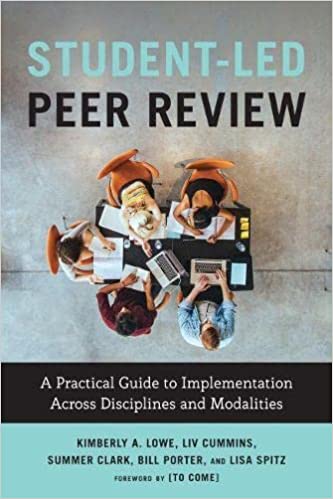
Student-Led Peer Review:
A Practical Guide to Implementation Across Disciplines and Modalities
Based on the authors’ extensive experience and research, this book provides a practical introduction to the key principles, steps, and strategies to implement student peer review – sometimes referred to as “peer critique” or “workshopping”. It addresses common challenges that faculty and students encounter. The authors offer an easy-to-follow and rigorously tested three-part protocol to use before, during, and after a peer review session, and advice on adapting each step to individual courses.
"This book offers a research-based, practitioner-focused approach to using peer review in the classroom. The authors do a masterful job of anticipating the challenges of student peer review and describing the considerable benefits that accrue when students are asked to take responsibility, think critically and gain agency. The book is an excellent resource for teachers, as it provides strong rationale for encouraging peer review and compelling ideas for designing instruction and environments that foster student growth in this vital area. Highly recommended!"
- Peter Afflerbach, University of Maryland